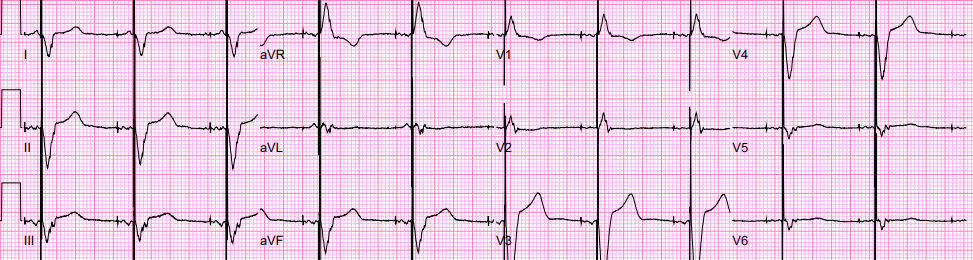
A pacemaker is a programmable sense-and-pace engine. It watches for intrinsic depolarization in one or more chambers and delivers a pacing stimulus when the rhythm fails programmed criteria. Beyond that core function, every modern system stores diagnostics, runs rate response, switches modes on atrial tachyarrhythmias, and ships data via remote monitoring.
This overview covers the three categories on the US market: transvenous, leadless, and CRT-P.
How the system works
- A pulse generator houses the battery, sensing circuit, output capacitor, and microprocessor running the pacing algorithm.
- One or more leads carry the pacing pulse to the myocardium and the intrinsic signal back to the can.
- Sensing happens between the lead tip and a reference (ring for bipolar, can for unipolar) — the device declares an intrinsic beat when the signal crosses the programmed sensitivity threshold.
- Pacing fires after a programmed escape interval if no sensed event arrives — the output is set at roughly 2x the capture threshold for safety margin.
Types / Variants
Transvenous
The workhorse design. Generator in a pre-pectoral pocket (occasionally sub-pectoral), leads through the axillary, subclavian, or cephalic vein.
- Single-chamber RV (VVI/VVIR) — usually for permanent AF with bradycardia; one lead to the RV apex or septum.
- Single-chamber RA (AAI/AAIR) — isolated sinus node dysfunction with intact AV conduction; rarely chosen as a standalone now because of unpredictable future AV block.
- Dual-chamber (DDD/DDDR) — the default for sinus node dysfunction with any AV concern, or for AV block. RA lead in the appendage, RV lead in the apex or mid-septum.
FDA-approved branded systems: Medtronic Azure / Astra, Abbott Assurity MRI, Boston Scientific Accolade / Resonate (Resonate is the CRT-D platform; the pacemaker counterpart is Accolade for standard pacing).
Leadless
A self-contained capsule delivered through a femoral venous sheath, fixed to the RV septum.
- Medtronic Micra — nitinol tines, VVI/VVIR (Micra VR) or AV-synchronous VDD (Micra AV) using accelerometer-derived atrial mechanical sensing.
- Abbott Aveir — helical fixation, retrievable. Aveir VR is ventricular-only; Aveir DR pairs an atrial Aveir with a ventricular Aveir using i2i conducted-communication between the two to deliver true dual-chamber pacing without leads.
Indications: patients with limited venous access, prior device infections, dialysis patients, or any case where avoiding a pocket and transvenous lead is clinically preferable.
CRT-P
Cardiac resynchronization without defibrillator capability — a transvenous system with three leads.
- RA lead, RV lead, and an LV lead delivered through the coronary sinus to a lateral or posterolateral cardiac vein.
- Used in HFrEF with LBBB or wide QRS where the indication is symptomatic resynchronization but the patient does not meet (or accept) ICD criteria.
- Platforms: Medtronic Cobalt HF / Crome HF, Abbott Quadra Assura, Boston Scientific Valitude / Visionist.
Indications & candidate selection
| Scenario | Preferred system |
|---|---|
| Permanent AF with bradycardia | Single-chamber transvenous or leadless VVIR |
| Sinus node dysfunction, intact AV | Dual-chamber transvenous (DDDR with AV search) |
| Complete AV block, otherwise healthy | Dual-chamber transvenous |
| AV block with limited venous access or prior infection | Leadless AV (Micra AV) or Aveir DR |
| HFrEF + LBBB + no ICD indication | CRT-P |
| HFrEF + LBBB + ICD indication | CRT-D (see CRT-D overview) |
Key programming considerations
- Mode: match the conduction disease — DDDR for AV block, AAIR or DDDR with MVP/AV search for pure SND.
- Lower rate: typically 50-60 bpm; lower in highly active patients with chronotropic competence.
- AV delay: shorter sensed than paced; tune to intrinsic conduction where possible to minimise RV pacing.
- Rate response: enable for chronotropic incompetence; off for fixed-rate AF patients on rate control already.
- Mode switch: DDD-to-DDI/VVI on atrial tachyarrhythmia detection; verify the cutoff isn’t catching sinus tachycardia.
What to know in the lab
- Confirm venous patency on the implant side before draping — prior CIEDs or central lines often leave silent occlusions.
- For leadless deployment, the deflection on the delivery catheter matters more than fluoro angle — get a stable septal position before deployment.
- Pull-test every leadless device after deployment but before release — Micra needs 2 of 4 tines engaged; Aveir verifies via the dedicated tug.
- For CRT-P, map the LV venous anatomy with retrograde venogram before committing — a quadripolar lead lets you avoid phrenic capture without repositioning.
- RV septal position generally beats apex for long-term RV-pacing tolerance, but never compromise threshold for septum.
Common issues & troubleshooting
- Leadless dislodgement — almost entirely intra-procedural; rare after 30 days. Confirm tine/helix engagement.
- Loss of AV synchrony on Aveir DR — check i2i conduction quality; the system can drop back to VDI temporarily.
- Phrenic capture (CRT-P) — try alternate LV vectors on a quadripolar lead before considering reposition.
- High RV pacing burden in DDD — enable Managed Ventricular Pacing or extend AV delay to recruit intrinsic conduction.
- Subclavian crush — older or laterally-placed leads riding through the costoclavicular space fracture over years; favour cephalic or axillary access at implant.